All articles
In-depth articles on backend, data, system architecture and software development.
Search articles
Search articles
All articles
In-depth articles on backend, data, system architecture and software development.
Collection
Eight decisions from building a platform of thirteen NestJS services — from the monorepo and the wire protocols to data ownership, reliable events, safe retries, sessions and deployment.
6 parts · in reading order
Start reading at part 1%22/%3E %3Crect width=%221200%22 height=%22630%22 fill=%22url(%23glow)%22/%3E %3Crect width=%221200%22 height=%22630%22 fill=%22url(%23grid)%22/%3E %3Cpath d=%22M270 170 C270 220 180 220 180 270%22 fill=%22none%22 stroke=%22%235de6ff%22 stroke-opacity=%220.55%22 stroke-width=%223%22 stroke-linecap=%22round%22 stroke-linejoin=%22round%22/%3E%3Cpath d=%22M270 170 C270 220 460 220 460 270%22 fill=%22none%22 stroke=%22%235de6ff%22 stroke-opacity=%220.55%22 stroke-width=%223%22 stroke-linecap=%22round%22 stroke-linejoin=%22round%22/%3E%3Cpath d=%22M600 170 C600 220 460 220 460 270%22 fill=%22none%22 stroke=%22%235de6ff%22 stroke-opacity=%220.55%22 stroke-width=%223%22 stroke-linecap=%22round%22 stroke-linejoin=%22round%22/%3E%3Cpath d=%22M600 170 C600 220 740 220 740 270%22 fill=%22none%22 stroke=%22%235de6ff%22 stroke-opacity=%221%22 stroke-width=%223%22 stroke-linecap=%22round%22 stroke-linejoin=%22round%22/%3E%3Cpath d=%22M930 170 C930 220 740 220 740 270%22 fill=%22none%22 stroke=%22%235de6ff%22 stroke-opacity=%221%22 stroke-width=%223%22 stroke-linecap=%22round%22 stroke-linejoin=%22round%22/%3E%3Cpath d=%22M930 170 C930 220 1020 220 1020 270%22 fill=%22none%22 stroke=%22%235de6ff%22 stroke-opacity=%220.55%22 stroke-width=%223%22 stroke-linecap=%22round%22 stroke-linejoin=%22round%22/%3E%3Cpath d=%22M180 340 C180 390 370 390 370 440%22 fill=%22none%22 stroke=%22%235de6ff%22 stroke-opacity=%220.55%22 stroke-width=%223%22 stroke-linecap=%22round%22 stroke-linejoin=%22round%22/%3E%3Cpath d=%22M460 340 C460 390 370 390 370 440%22 fill=%22none%22 stroke=%22%235de6ff%22 stroke-opacity=%220.55%22 stroke-width=%223%22 stroke-linecap=%22round%22 stroke-linejoin=%22round%22/%3E%3Cpath d=%22M740 340 C740 390 830 390 830 440%22 fill=%22none%22 stroke=%22%235de6ff%22 stroke-opacity=%220.55%22 stroke-width=%223%22 stroke-linecap=%22round%22 stroke-linejoin=%22round%22/%3E%3Cpath d=%22M1020 340 C1020 390 830 390 830 440%22 fill=%22none%22 stroke=%22%235de6ff%22 stroke-opacity=%220.55%22 stroke-width=%223%22 stroke-linecap=%22round%22 stroke-linejoin=%22round%22/%3E%3Crect x=%22170%22 y=%22100%22 width=%22200%22 height=%2270%22 rx=%2214%22 fill=%22%2340c8e0%22 fill-opacity=%220.06%22 stroke=%22%235de6ff%22 stroke-opacity=%220.55%22 stroke-width=%223%22/%3E%3Ctext x=%22270%22 y=%22143%22 fill=%22%238aa0b8%22 font-family=%22ui-monospace,SFMono-Regular,Menlo,monospace%22 font-size=%2220%22 font-weight=%22500%22 text-anchor=%22middle%22%3Eapps/api%3C/text%3E%3Crect x=%22500%22 y=%22100%22 width=%22200%22 height=%2270%22 rx=%2214%22 fill=%22%2340c8e0%22 fill-opacity=%220.16%22 stroke=%22%235de6ff%22 stroke-opacity=%221%22 stroke-width=%223%22/%3E%3Ctext x=%22600%22 y=%22143%22 fill=%22%235de6ff%22 font-family=%22ui-monospace,SFMono-Regular,Menlo,monospace%22 font-size=%2220%22 font-weight=%22500%22 text-anchor=%22middle%22%3Eapps/web%3C/text%3E%3Crect x=%22830%22 y=%22100%22 width=%22200%22 height=%2270%22 rx=%2214%22 fill=%22%2340c8e0%22 fill-opacity=%220.16%22 stroke=%22%235de6ff%22 stroke-opacity=%221%22 stroke-width=%223%22/%3E%3Ctext x=%22930%22 y=%22143%22 fill=%22%235de6ff%22 font-family=%22ui-monospace,SFMono-Regular,Menlo,monospace%22 font-size=%2220%22 font-weight=%22500%22 text-anchor=%22middle%22%3Eapps/worker%3C/text%3E%3Crect x=%2280%22 y=%22270%22 width=%22200%22 height=%2270%22 rx=%2214%22 fill=%22%2340c8e0%22 fill-opacity=%220.06%22 stroke=%22%235de6ff%22 stroke-opacity=%220.55%22 stroke-width=%223%22/%3E%3Ctext x=%22180%22 y=%22313%22 fill=%22%238aa0b8%22 font-family=%22ui-monospace,SFMono-Regular,Menlo,monospace%22 font-size=%2220%22 font-weight=%22500%22 text-anchor=%22middle%22%3Elibs/db%3C/text%3E%3Crect x=%22360%22 y=%22270%22 width=%22200%22 height=%2270%22 rx=%2214%22 fill=%22%2340c8e0%22 fill-opacity=%220.06%22 stroke=%22%235de6ff%22 stroke-opacity=%220.55%22 stroke-width=%223%22/%3E%3Ctext x=%22460%22 y=%22313%22 fill=%22%238aa0b8%22 font-family=%22ui-monospace,SFMono-Regular,Menlo,monospace%22 font-size=%2220%22 font-weight=%22500%22 text-anchor=%22middle%22%3Elibs/auth%3C/text%3E%3Crect x=%22630%22 y=%22260%22 width=%22220%22 height=%2290%22 rx=%2222%22 fill=%22none%22 stroke=%22%235de6ff%22 stroke-opacity=%220.35%22 stroke-width=%223%22/%3E%3Crect x=%22640%22 y=%22270%22 width=%22200%22 height=%2270%22 rx=%2214%22 fill=%22%2340c8e0%22 fill-opacity=%220.16%22 stroke=%22%235de6ff%22 stroke-opacity=%221%22 stroke-width=%223%22/%3E%3Ctext x=%22740%22 y=%22313%22 fill=%22%235de6ff%22 font-family=%22ui-monospace,SFMono-Regular,Menlo,monospace%22 font-size=%2220%22 font-weight=%22500%22 text-anchor=%22middle%22%3Elibs/proto%3C/text%3E%3Crect x=%22920%22 y=%22270%22 width=%22200%22 height=%2270%22 rx=%2214%22 fill=%22%2340c8e0%22 fill-opacity=%220.06%22 stroke=%22%235de6ff%22 stroke-opacity=%220.55%22 stroke-width=%223%22/%3E%3Ctext x=%221020%22 y=%22313%22 fill=%22%238aa0b8%22 font-family=%22ui-monospace,SFMono-Regular,Menlo,monospace%22 font-size=%2220%22 font-weight=%22500%22 text-anchor=%22middle%22%3Elibs/events%3C/text%3E%3Crect x=%22270%22 y=%22440%22 width=%22200%22 height=%2270%22 rx=%2214%22 fill=%22%2340c8e0%22 fill-opacity=%220.06%22 stroke=%22%235de6ff%22 stroke-opacity=%220.55%22 stroke-width=%223%22/%3E%3Ctext x=%22370%22 y=%22483%22 fill=%22%238aa0b8%22 font-family=%22ui-monospace,SFMono-Regular,Menlo,monospace%22 font-size=%2220%22 font-weight=%22500%22 text-anchor=%22middle%22%3Elibs/util%3C/text%3E%3Crect x=%22730%22 y=%22440%22 width=%22200%22 height=%2270%22 rx=%2214%22 fill=%22%2340c8e0%22 fill-opacity=%220.06%22 stroke=%22%235de6ff%22 stroke-opacity=%220.55%22 stroke-width=%223%22/%3E%3Ctext x=%22830%22 y=%22483%22 fill=%22%238aa0b8%22 font-family=%22ui-monospace,SFMono-Regular,Menlo,monospace%22 font-size=%2220%22 font-weight=%22500%22 text-anchor=%22middle%22%3Elibs/config%3C/text%3E %3C/svg%3E)
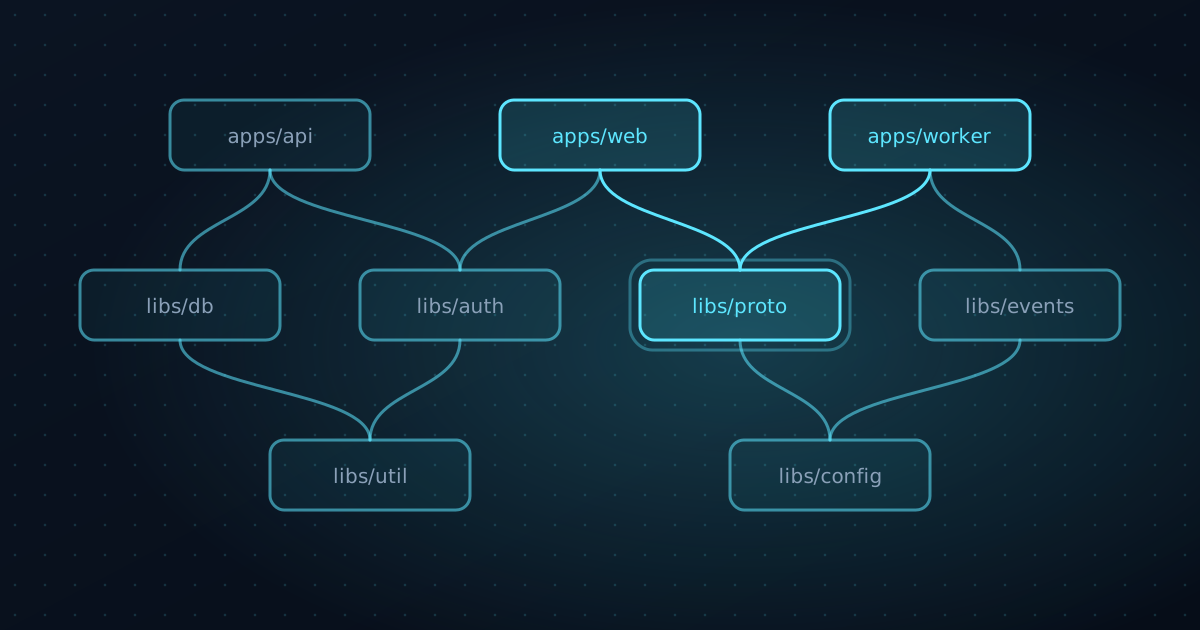
One commit can change a gRPC contract and every caller, but the deploys still land one at a time. Here is how thirteen NestJS services share one Nx workspace and still boot, ship and evolve alone.
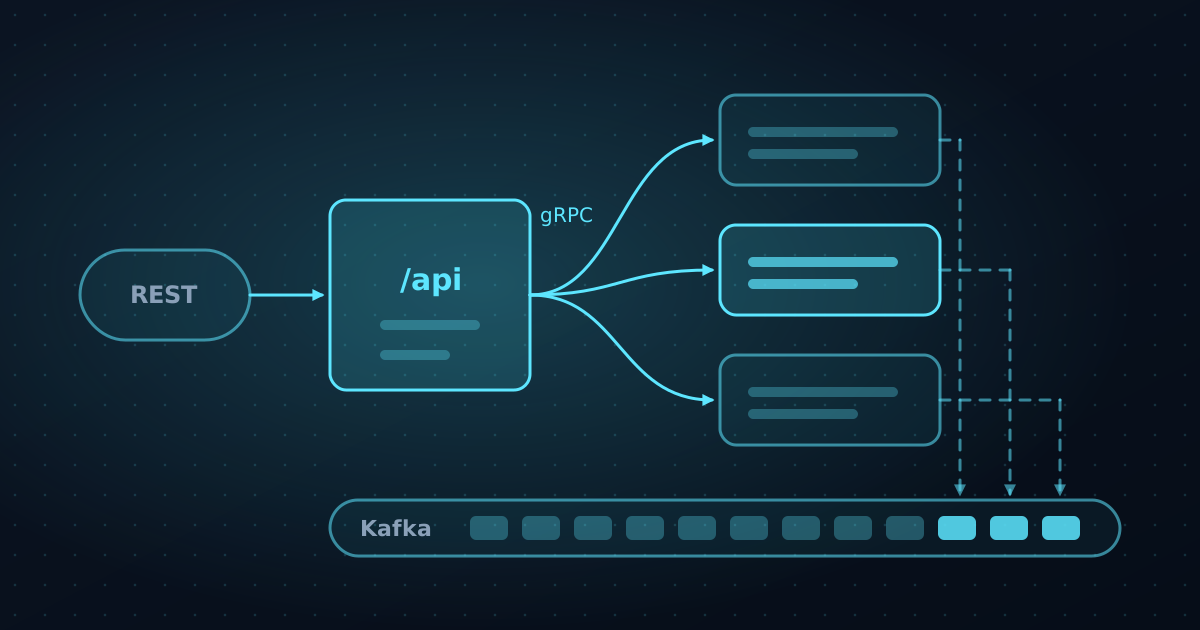
The gateway gave up after a minute; the gRPC call underneath had no deadline and kept working for a client that was gone. Three ordered questions pick REST, gRPC or Kafka, and each transport's failure mode tells you what to guard.
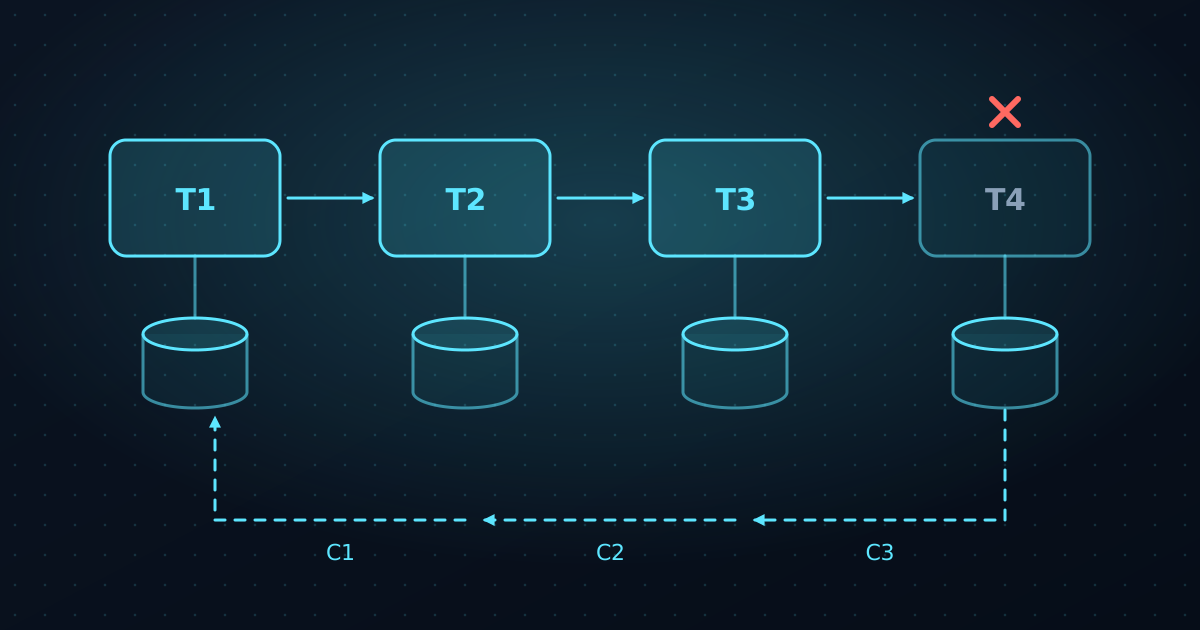
Thirteen services share one Postgres cluster, yet none can read another's tables. What that isolation buys, what a shared cluster quietly takes back, and how a saga with planned compensations replaces the JOIN.
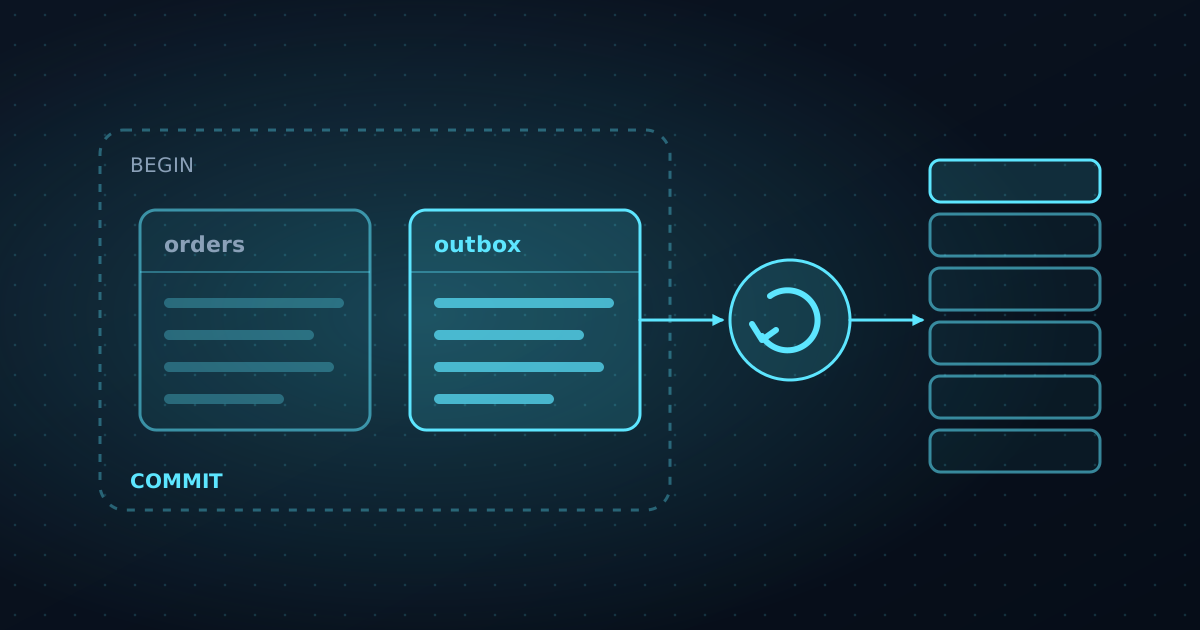
The outbox table is the easy part. Lost and duplicated events come from the relay and the consumer: who claims a row, what happens when a sender stalls, and how an inbox spots the same event twice.
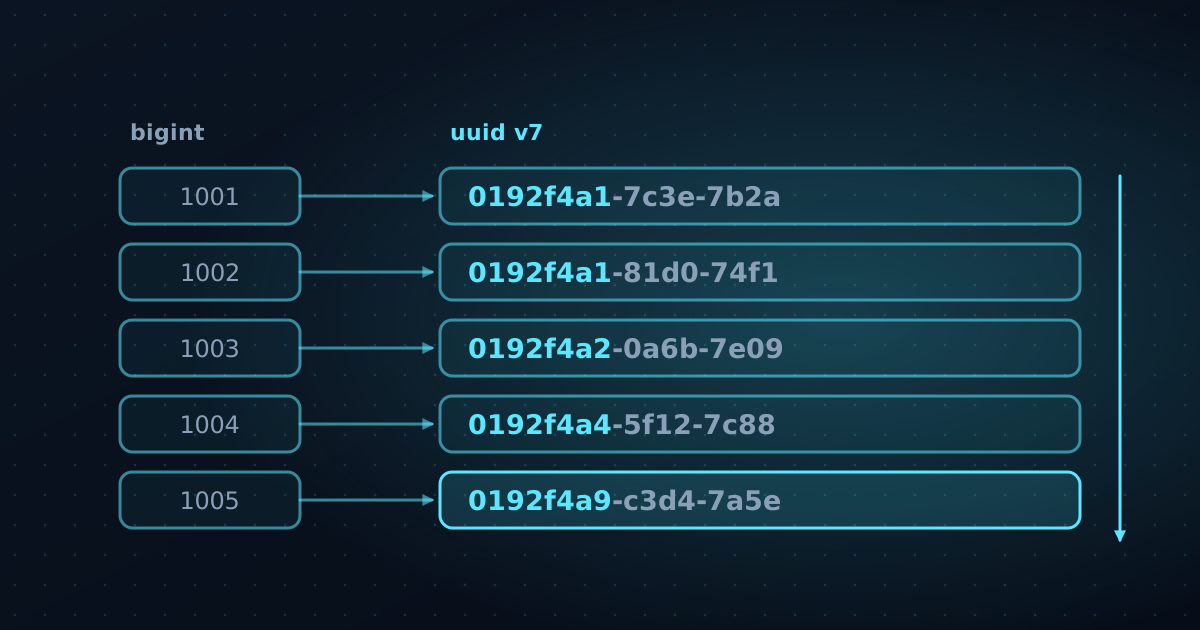
A URL ending in /orders/1042 tells strangers more than you meant. Why every addressable row gets a bigint for joins and a UUIDv7 for the outside, and what that second id really costs.
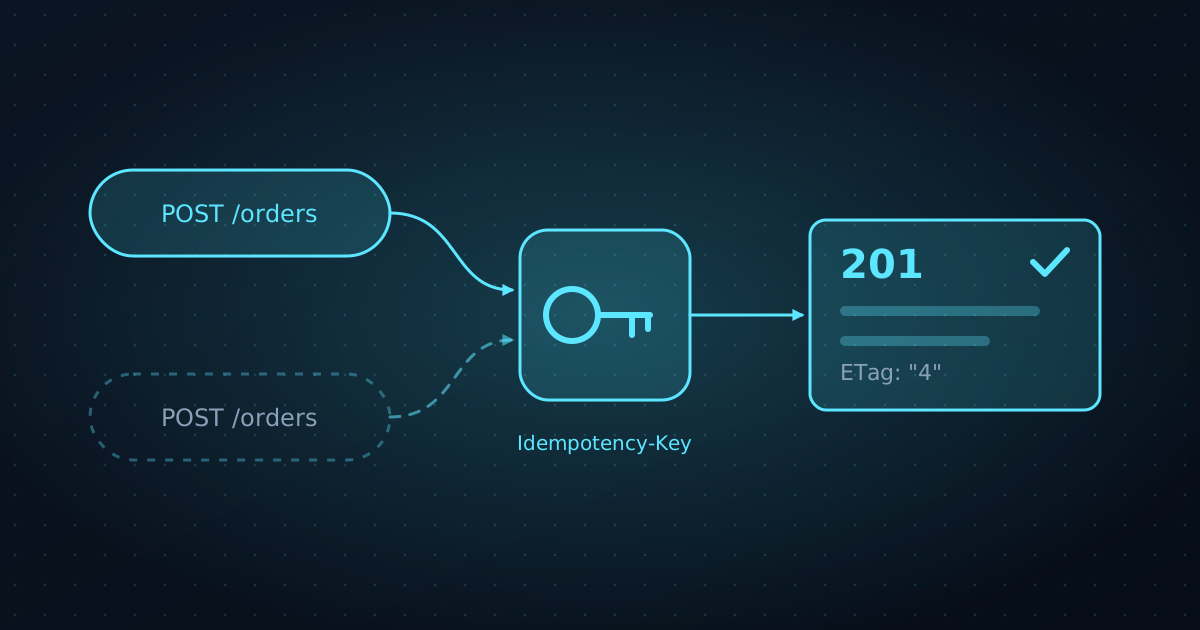
A timed-out request may have succeeded, failed or never arrived. How a receipt that commits with the order, plus If-Match versions, makes every retry safe, and why you need both.
You have seen all 6 articles.